
Thread
Community impact, reimagined
The Victoria Foundation brings data, people and investment together to support bold, community-driven solutions
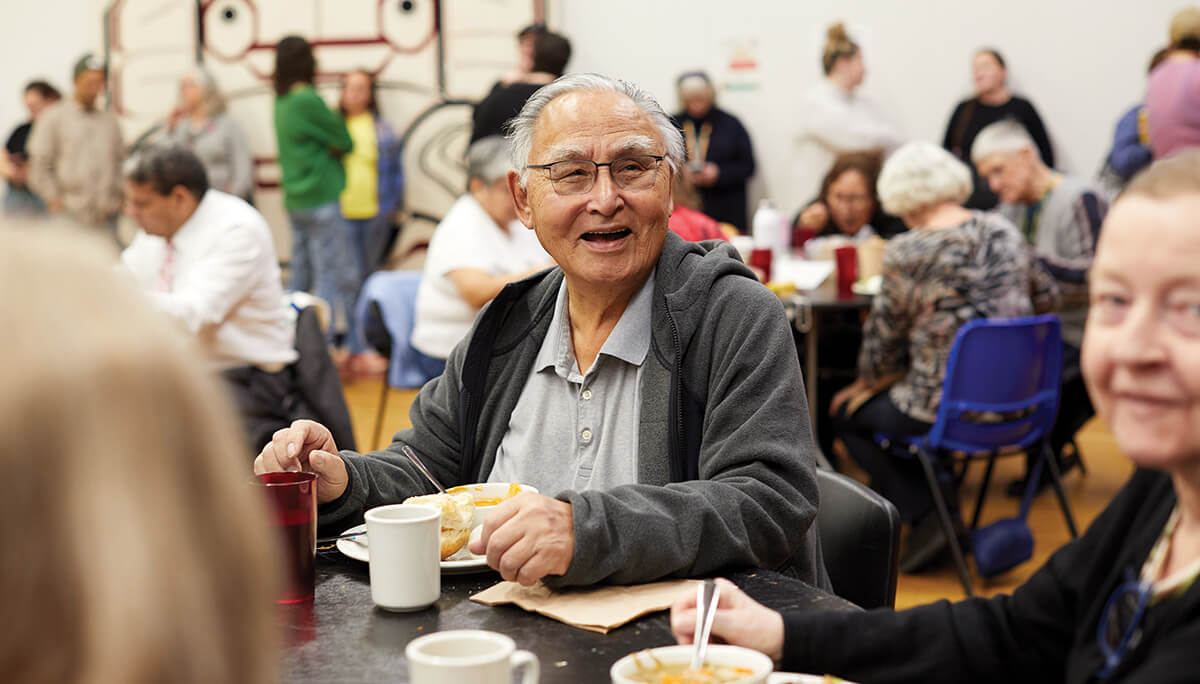
From food insecurity to housing affordability, some community challenges are impossible to ignore. Across Greater Victoria, community leaders are responding to these urgent issues in creative, impactful ways.
The Victoria Foundation is leaning into this momentum with an impact studio that delves into how it can better support community-led solutions by bringing people, rigorous data and intentional capital together.
“We’re focused on creating conditions where community action and collaboration can thrive,” says Jessica Doll, Director of Innovation and Impact.
As challenges grow more complex, the Foundation is exploring its role as a coordinator by integrating these efforts to help achieve what wouldn’t be possible otherwise.
To do this, the Foundation is focusing on three priority impact areas: sustaining cultural and arts spaces, strengthening local food systems and supporting a collaborative effort to prevent youth homelessness.
Doll says each area reflects “an issue where urgency is clear, leadership exists and the Foundation can play a meaningful role in helping community partners move forward with the right tools.”
As Carol Hall, Senior Director of Innovation and Impact, puts it, “We’re behind the scenes, working alongside community leaders to advance their vision and help solve some of today’s most pressing issues.”
Let’s have a closer look at these priority areas.
“This alignment creates the conditions for real, sustained change, and that is where hope lives.”
Julie-Ann Hunter,
Executive Director of the Victoria Youth Empowerment Society
Community impact: toward functional zero
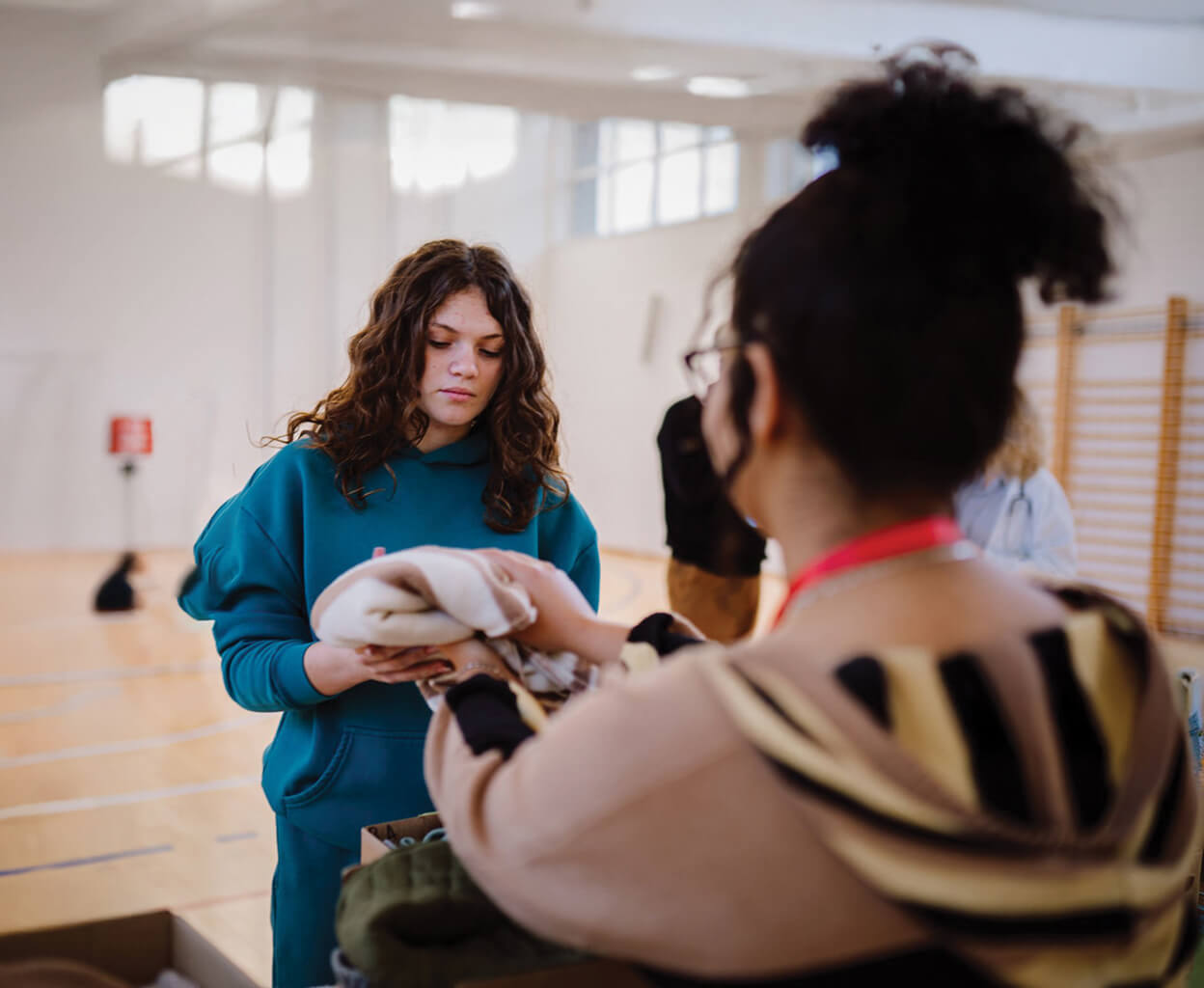
Youth homelessness, one of the strongest indicators for chronic adult homelessness, is rising in the capital region. Much of it is hidden.
Community data shows that many young people are couch surfing, staying in unsafe homes or frequenting shelters.
A 2025 Point-in-Time count identified 70 youth in the region experiencing homelessness on any given night, with Indigenous youth representing a third of the counts.
Julie-Ann Hunter, Executive Director of the Victoria Youth Empowerment Society, says the needs of young people have “increased significantly in volume and complexity, but the systems and housing options meant to support them have not kept pace.”
Hunter is a Co-Chair for the Collaborative to Prevent Youth Homelessness, a strategic network of nine* youth-serving organizations. They’ve come together to work toward intervening early, connecting youth with safe housing and providing harm reduction supports, culturally relevant care, mental health services and other supports.
The Victoria Foundation is pleased to support the Collaborative’s goal to reach “functional zero youth homelessness,” meaning that crises are brief, rare and non-recurring because youth are supported quickly.
“We’re building a system where young people are met with clear pathways to housing, the right level of support and a sense that the community is walking alongside them,” explains Hunter.
* The Collaborative includes Threshold Housing Society, Thrive Social Services Society, BGC South Vancouver Island, Aboriginal Coalition to End Homelessness Society, Beacon Community Services, Victoria Native Friendship Centre, Victoria Youth Empowerment Society, Sanctuary Youth Centre and the Victoria Foundation.
Community impact: preserving the arts
“When we lose access to the arts, we risk losing our humanity,” says Jenn Neilson, PhD. “It means losing community connections, feelings of inclusion, political awareness and the opportunity to make and consider social commentary.”
Artists and arts organizations in the capital region face a critical tipping point, often struggling to access affordable, appropriate spaces to create and perform, especially since the COVID-19 pandemic spurred the loss of critical infrastructure.
Long-established organizations, including the Victoria Conservatory of Music and the Victoria Symphony, along with dozens of smaller arts groups, are looking to sustain or acquire their own downtown spaces.
The Victoria Foundation is working with charitable organizations, the government and businesses to interpret local data, clarify inventory and find opportunities to sustain music, performance and visual arts spaces regionwide.
Community data reveals that few purpose-built artistic spaces exist and that rental and real estate prices continue to rise.
Jenn Neilson is a co-founder of The Arts and Community Infrastructure Foundation, a new organization formed to prevent arts organizations from closing or being displaced, by housing them under non-profit landlords.
Neilson says she’s excited about how the community is coming together to own their own spaces – everyone from small organizations with occasional needs, to large galleries and theatres, to groups representing marginalized and diverse communities.
“There has never been more support for the idea that arts organizations need to own the means of production.”


Community impact: a sustainable food future
Kent Mullinix, PhD, says Vancouver Island could be the perfect place for a fully sustainable, local food system, where food is produced, sold and enjoyed in ways that protect the environment and economy.
“The populace is greatly supportive of ‘local food,’ there’s a distinct island identity and the island has the natural and human resource capacity,” explains Mullinix, Director of the Institute for Sustainable Food Systems at Kwantlen Polytechnic University (KPU).
This comes as food insecurity rises across the capital region and beyond, despite community food efforts working harder than ever.
In 2023, over 18 per cent of residents in the Island Health region worried about having enough food. The Consumer Price Index says overall food prices rose by more than 55 per cent between 2016 and 2025. Today, around 65,000 people rely monthly on the region’s Food Security Distribution Centre.
To help shift toward sustainability, the Victoria Foundation is prioritizing the local food economy to support farmers, food makers and organizations in our region.
One major step is collecting data on Vancouver Island’s nutritional and infrastructure needs. Mullinix and his KPU team, after completing similar studies for Southwest BC and the Okanagan, are assessing everything from self-reliance on food to vulnerabilities in the food system, to economic possibilities. The Victoria Foundation is supporting this research and will use its findings to work with the community toward future investment opportunities.
Mullinix says he hopes this compelling research supports local food advocates and persuades policy decision-makers to enable a self-sustaining food system.
Across these priority areas, a common thread emerges: lasting solutions are built in community, not in isolation. By integrating data, people and investment, the Victoria Foundation is working to unlock impact that no single organization could achieve alone.